
As we approach the end of 2025, I wanted to share something with you that’s been on my mind—and increasingly, on this blog—over the past two years. It’s the story of how I’ve navigated one of retirement’s most anxiety-inducing topics: taxes.
This compilation will be of particular interest to the following groups of retirees/near retirees:
1.) You recently retired and are concerned about how taxes may affect you. You may be wondering whether you should aggressively pursue Roth conversions, since you didn’t do any (or did very little) while working and have limited amounts in Roth accounts, if any.
2.) You are retired and in your late 60s, meaning that you are nearing the age (70½) when you can start making QCDs, and are also getting closer and closer to your RMD age (either 73 or 75, depending on when you were born).
3.) You are in your early 70s and have learned about QCDs and RMDs, and want to optimize your tax situation as you do both.
4.) You’re in your 50s or early 60s and not yet retired, but want to learn as much as you can about Roth conversions, QCDs, RMDs, and tax arbitrage before you do.
You may be like me
Perhaps like many of you, I retired with most of my savings in traditional, taxable retirement accounts. I wondered if I’d made mistakes. I questioned whether I should have done more Roth conversions. I was concerned whether the “tax torpedo” everyone warns about would sink my retirement plan.
In short, I thought taxes would derail my retirement financial plan.
But after many hours of research, calculations, and doing my taxes, here’s what I discovered: the reality of retirement taxes is far less frightening than the rhetoric suggests. In fact, with the right strategies and a clear understanding of how the tax code actually works, most retirees—including me—will pay significantly less in taxes than we did during our working years.
Although I didn’t necessarily intend it this way, I’ve actually documented this journey in a series of articles over the past two years, including one I just published without sending a regular email update titled “Getting My Year-End Tax Withholding Right: It’s Less Complicated Than It Sounds,” and I’d like to invite you to walk through them with me. Think of it as a roadmap—one that moves from initial concerns to practical implementation, and finally, to a place of confidence and peace.
The beginning: the basics and starting to question my past decisions
Roth IRAs, Roth Conversions, and the New Tax Laws (Updated 2025) (Originally published in 2018; updated in 2025)
Back in 2018, I wrestled with a question that many pre-retirees face: Should I convert my Traditional IRA to a Roth? I had most of my retirement savings in Traditional accounts because Roth options either didn’t exist or had strict income limits during my peak earning years. The idea of paying a huge tax bill upfront to maybe save on taxes decades later didn’t sit well with me.
I ran the numbers using conversion calculators, tested different scenarios, and ultimately concluded that conversions didn’t make sense for my situation. The tax bill would be enormous, I’d have to use IRA funds to pay it (which kills the math), and even with lower current tax rates, the benefit wasn’t compelling enough to justify handing the government tens of thousands of dollars today.
Fast forward to 2025. I’ve now lived through seven years of actual retirement with actual tax returns. I’ve navigated RMDs, discovered the power of QCDs, and watched the One Big Beautiful Bill Act reshape the tax landscape. And here’s what I’ve learned: I believe I made the right call—probably for reasons I didn’t fully understand at the time.
But here’s the critical update: the rules have changed. Since 2018, you can no longer “recharacterize” a Roth conversion—meaning once you convert, you can’t undo it. That makes the decision far more consequential than it used to be.
Key insight: For most middle-income retirees who give charitably, QCDs often deliver better tax benefits than Roth conversions ever would have. And for younger workers in lower brackets? Roth accounts are tremendous—the decades of tax-free growth are incredibly valuable.
The bottom line: Whether Roth conversions make sense depends entirely on your specific situation. But the good news is that retirement taxes are far less scary than the financial media would have you believe.
A few years later: still questioning my decisions
Could I Have Done a Better Job of Tax Planning Before I Retired? (March 2024)
I’ve written a little about taxes before, such as an article on taxes on Social Security benefits back in 2021. Like many retirees facing tax season, I found myself second-guessing my choices—again. Should I have contributed more to Roth accounts? As I alluded to above, did I miss opportunities for Roth conversions? Was my lack of tax diversification going to cost me dearly?
I dug into the numbers and discovered something surprising: my effective tax rate in retirement was actually lower than my marginal rate during my peak earning years. The math suggested I’d made reasonable decisions after all. But I still had concerns about the future, especially with RMDs looming on the horizon.
Key insight: Tax arbitrage works—paying lower rates in retirement than you paid on contributions during working years is a real and achievable benefit.
Year-end reflections: taking stock
Year-End Thoughts on Retirement Stewardship (December 2024—not updated for 2025)
As 2024 drew to a close, I took time to reflect on my overall financial situation. This article captures my year-end planning process—reviewing portfolio allocations, considering upcoming RMDs, and reflecting on my giving strategy.
Even though it’s a year old, this article describes my year-end planning regime, which doesn’t change much from one year to the next, which is one reason why I included it.
But more importantly, I included this article because in it I discuss how I realized that there is a critical IRS rule that I hadn’t considered before: I can delay tax withholding from my IRA until year-end and still satisfy the requirements, earning interest on that money throughout the year rather than sending it to the IRS monthly. Small moves like this, I realized, can add up to meaningful stewardship (and make life simpler too!).
Key insight: Year-end planning isn’t just about taxes—it’s about aligning your financial decisions with your values and priorities.
Facing the milestone: RMDs are coming
Preparing for an Important Retirement Financial Milestone in 2025 (January 2025)
The year I turned 73 arrived, which meant Required Minimum Distributions were no longer theoretical—they were real. I needed to understand the timing, calculate the amounts, and prepare for the implications.
This article walks through the mechanics: when RMDs actually begin (not as intuitive as you might think), how to calculate them using IRS life expectancy tables, and what it would mean for my overall tax picture.
Key insight: RMDs aren’t as scary as they sound, especially if you’ve already been taking distributions at a similar rate and have a plan for charitable giving.
Putting it all together: my 2025 strategy
My RMD Withdrawals, QCDs, and Tax Withholding for 2025 (Originally published in January 2025–updated in December 2025 based on the OBBBA)
This is where theory meets practice. I developed a comprehensive withdrawal strategy that integrated RMDs, Qualified Charitable Distributions (QCDs), and tax withholding into a single, coherent plan.
The math isn’t complicated, but it does require thinking through the interplay among all three components. I showed exactly how I calculated my minimum monthly withdrawal amount, factoring in quarterly QCDs and year-end tax withholding to fully satisfy IRS requirements while maximizing my money’s use throughout the year.
Key insight: With careful planning, you can satisfy RMD requirements, support ministries generously through QCDs, and optimize your tax withholding—all while keeping more money working for you longer.
Game changer: new tax legislation
The New “Big Beautiful” Tax Bill (July 2025)
Then came the One Big Beautiful Bill Act (OBBBA), and everything shifted—mostly for the better. The new law brought permanent changes and temporary provisions that significantly benefit retirees, including:
- A new $6,000 “senior bonus” deduction per person age 65+ (through 2028)
- Permanent extension of the current tax brackets
- Increased SALT deduction cap to $40,000
- Enhanced charitable giving provisions
I walked through real examples showing how these changes dramatically reduce tax liability for retirees at different income levels. One couple with over $100,000 in gross income paid only about 3.2% effective federal tax. Another couple paid zero.
Key insight: The new tax law is genuinely favorable to retirees, especially those who use QCDs and take advantage of senior deductions.
Giving wisely: charitable strategy in the new era
Giving in the OBBBA Era (September 2025)
With new tax rules came new considerations for charitable giving. Should I use QCDs or direct contributions? What about donor-advised funds? How do the new charitable deduction floors and caps affect my strategy?
This article explores how to maximize kingdom impact through strategic giving in light of OBBBA provisions. I examined QCDs (which remain incredibly valuable), the new above-the-line charitable deduction for non-itemizers starting in 2026, and strategies like “bunching” contributions to optimize tax benefits.
Key insight: QCDs are now even more attractive because they lower AGI without being subject to floors or caps, and they help protect against IRMAA surcharges and other income-based thresholds.
The big reveal: taxes aren’t the monster
Income Taxes in Retirement—Much Ado About Nothing? (October 2025)
This is where everything came together. After months of research, planning, and implementation, I could finally step back and see the big picture.
Through detailed examples spanning different retirement stages—from ages 66-69 (pre-Social Security), to ages 70-73 (Social Security but pre-RMD), to the RMD years, and even into widowhood—I demonstrated that effective tax rates for most retirees remain remarkably low.
The article shows actual couples at different income levels paying effective federal tax rates of 2%, 4%, and 5.4%—even with six-figure gross incomes. The combination of standard deductions, senior bonuses, QCDs, and the progressive tax structure creates what I call “tax arbitrage”: deducting contributions at 24-32% rates while working, then withdrawing at 10-12% (or less) in retirement.
Key insight: Most retirees will pay far less in taxes than they fear—often just a fraction of what they paid during working years. With planning, the “tax torpedo” is more like a gentle wave.
The final step: executing my year-end strategy
Getting My Year-End Tax Withholding Right: It’s Less Complicated Than It Sounds (New Article Just Published—December 2025) (Latest post – December 2025)
And that brings us to today. This final article documents how I’m actually implementing my 2025 tax strategy as the year comes to an end. I walk through my step-by-step process for:
- Calculating my exact tax liability for 2025
- Using an RMD withdrawal to cover 100% of my federal tax withholding
- Taking advantage of the year-end withholding rule to keep money invested longer
- Deciding whether to withhold state taxes or pay them in April
After all the research, planning, and strategizing, the execution is surprisingly straightforward. And the result? An effective federal tax rate of just 4.75% on my gross income, even in my first full year of RMDs.
Key insight: What seems complicated becomes manageable with understanding and a simple, repeatable process. The peace of mind is worth far more than the tax savings.
What this has taught me
Looking back over these eight articles and nearly two years of focused attention on retirement taxes, here’s what I’ve learned:
- Fear is often louder than facts. The financial media thrives on anxiety, but the reality for most retirees is far more favorable than the headlines suggest.
- Tax diversification matters less than you think. While having some Roth accounts is nice, the lifetime benefit of traditional accounts for middle-income earners is often substantial due to tax arbitrage.
- QCDs are a game-changer. If you’re 70½ or older and give to charity, QCDs should probably be your primary vehicle for charitable giving. They lower AGI, satisfy RMD requirements, and improve tax efficiency, even for non-itemizers.
- The new tax laws favor retirees. Between permanent bracket extensions and the temporary senior bonus, Congress has actually made retirement taxes more favorable, not less.
- Planning beats worrying. Once I stopped fretting and started calculating, I discovered I had far more control than I’d imagined.
- Stewardship is the goal, not tax avoidance. Yes, we should minimize taxes as wise stewards. But the ultimate objective is to use God’s resources faithfully—to provide for our needs, give generously, and live with confidence and joy.
I’m grateful
If you’ve been anxious about retirement taxes, I encourage you to read through these articles in sequence. You may find that your concerns are unwarranted. Sure, it would be great to pay no taxes on any of our retirement income, but it’s also good to pay much less tax on each dollar than you did when you were working, saving, and investing for the future.
As we move into 2026, I’m grateful for what this journey has taught me. The “tax monster” turned out to be manageable after all—not because I’m particularly clever, but because the system actually works reasonably well for those who take time to understand it.
May you find similar peace and confidence as you steward the resources God has entrusted to you.
P.S. If you found this series helpful, please share it with other retirees who might benefit. And if you’re not yet receiving my weekly newsletter with articles like these, you can subscribe here.
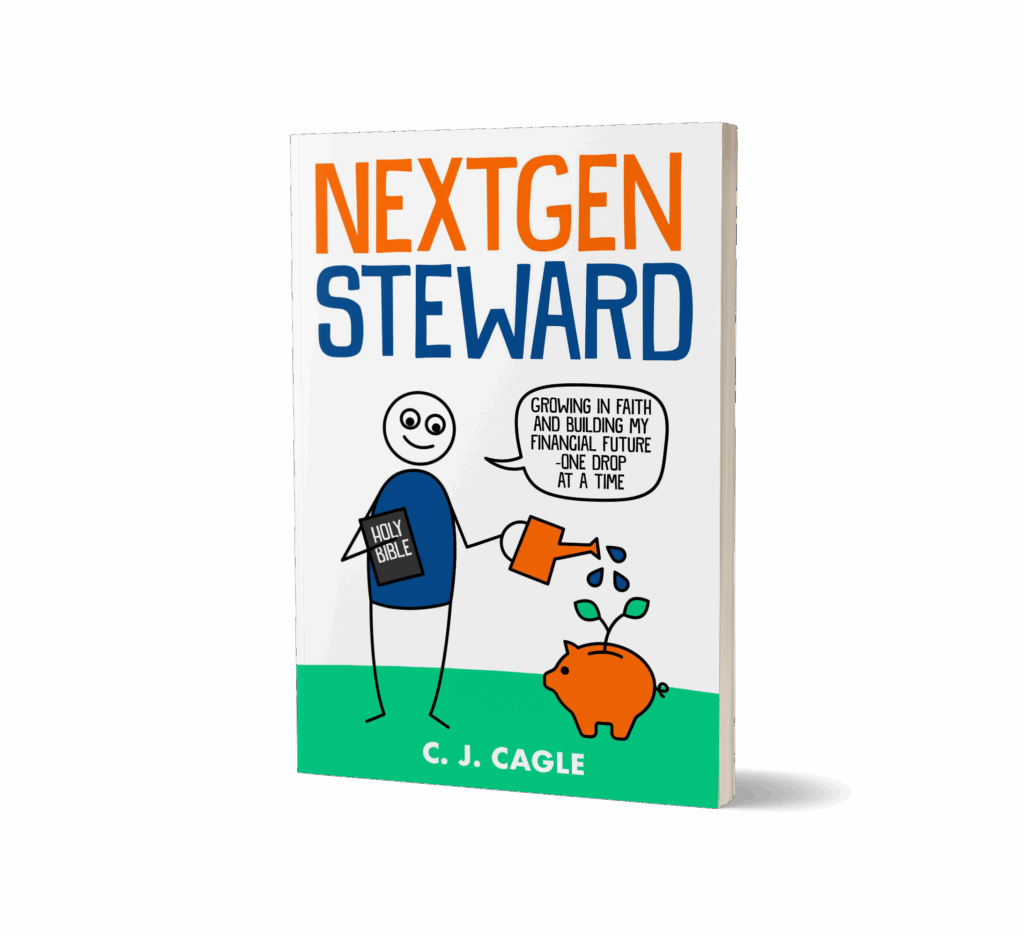
Also, if you are looking for a gift for a young adult in your family or church, consider my latest book, NextGen Steward.