
This article is part of the Biblically-Informed Framework for Retirement Stewardship (BIFRS) series. It was initially published on August 13, 2020, and was updated in January 2026.
The original article focused primarily on the purchase of a retirement home. However, it has been updated within the RFLE to include rental real estate as Tier 2 income.
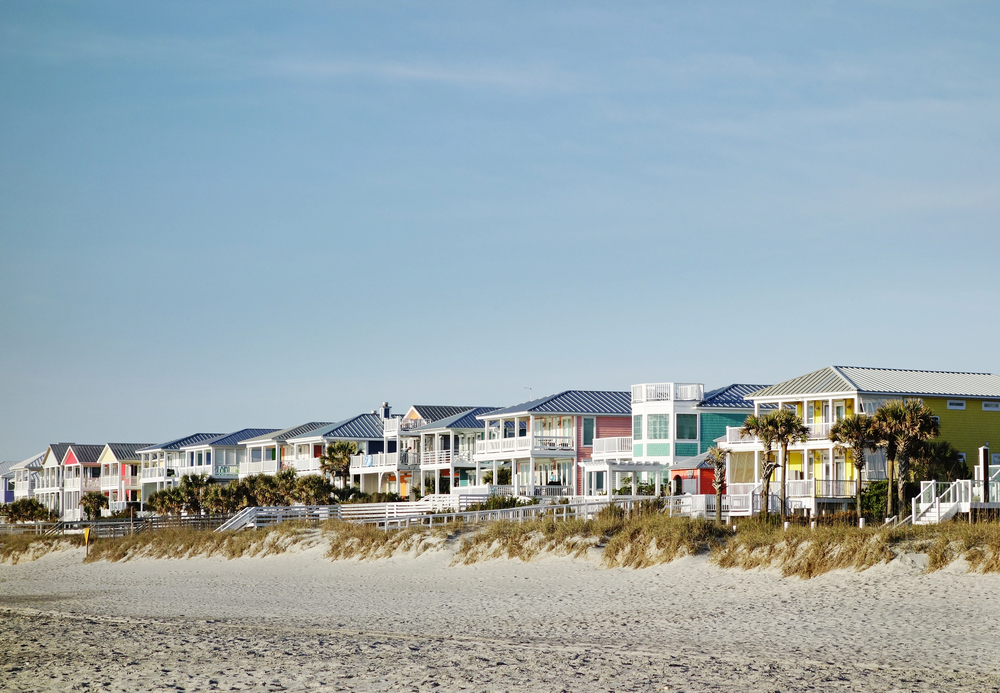
A friend recently asked whether purchasing rental property—specifically a beach house that could generate income while also serving as a family vacation spot—would be wise stewardship. The conversation highlighted an interesting question: Can rental real estate serve as a reliable Tier 2 income source within the RFLE framework?
The short answer: It depends on whether you’re approaching this as an income investment or a lifestyle decision, or whether you’re mixing the two.
Rental real estate can work as Tier 2 income for some retirees, but it requires an honest assessment of your circumstances, temperament, and willingness to be a landlord or pay someone else to be one. This article examines rental property through the lens of retirement income planning rather than wealth accumulation.
Understanding Tier 2 income in the RFLE
The Retirement Financial Life Equation organizes income sources into three tiers based on reliability. Tier 1 provides guaranteed lifetime income through Social Security, pensions, and immediate annuities—this covers essential expenses and cannot be outlived. Tier 2 offers reliable but not guaranteed income from sources such as bond interest, dividend stocks, TIPS, and rental income, ideally covering discretionary expenses or providing a buffer above essentials. Tier 3 offers variable income through portfolio withdrawals, part-time work, and strategic home equity use, funding wants beyond needs, and providing long-term inflation protection.
Rental real estate fits naturally in Tier 2 when managed properly. It provides regular monthly income through rent checks, inflation protection as rents typically rise over time, tax advantages through depreciation and expense deductions, and tangible asset diversification as an alternative to stocks and bonds.
However, rental properties also introduce management responsibilities, including tenant issues, maintenance, and vacancies. They create concentration risk in a single property or location, present liquidity challenges since you can’t easily sell when needed, and generate variable income due to vacancies, non-payment, or seasonal fluctuations.
The question isn’t whether rental income belongs in Tier 2—it’s whether you should be the one managing rental properties in retirement.
Three approaches to rental real estate
Approach 1: Pure investment property (long-term rentals)
This approach treats rental real estate exactly like owning dividend stocks or bonds; it’s focused exclusively on generating income and capital appreciation. You never use the property personally. Instead, you purchase a single-family home or small multi-family property in a strong rental market, secure 12-month lease agreements with stable tenants, and either manage it yourself if local or hire professional management.
The economics can work well when done right. In good markets, you can achieve 5-8% net rental yield after all expenses, which typically consume 35-45% of rental income through management fees, maintenance, vacancies, insurance, taxes, and HOA fees. The monthly rent checks provide predictable income similar to bond interest, while 12-month lease contracts create stability with 90-95% typical occupancy rates.
The tax benefits add meaningful value. Depreciation deductions, expense write-offs, and 1031 exchanges for property upgrades can significantly improve after-tax returns compared to fully taxable bond interest. Long-term appreciation potential of 3-5% annually in most markets provides additional total return beyond the income yield.
But the challenges are real and often underestimated. Tenant issues range from non-payment to property damage to evictions. Maintenance emergencies don’t respect your schedule—you’ll get calls about broken water heaters and HVAC failures at 2 AM. Vacancy periods mean income stops while expenses continue. If you hire professional property management to avoid these headaches, you’ll pay 8-12% of rent, which significantly impacts your net yield. Investment property mortgages typically require 20-25% down payments, and you’ll need 6-12 months of expense reserves to weather vacancies and repairs.
Location matters enormously. The right market with strong job growth, good schools, and population increases produces steady tenants and rising rents. The wrong market means perpetual vacancies and losses, no matter how well you manage the property.
This approach is most suitable for retirees with landlord experience who enjoy property management as a semi-retirement activity, or for those willing to pay management fees and accept lower net yields in exchange for less involvement. It’s a poor fit for anyone seeking truly passive income or those who can’t tolerate middle-of-the-night emergency calls.
Approach 2: Short-term vacation rentals (Airbnb/VRBO Model)
Short-term vacation rentals sound appealing on paper. You purchase property in a tourist destination and rent it nightly or weekly at rates that can be three to five times higher than equivalent monthly long-term rents. Beach houses, mountain cabins, lake properties—these can generate impressive income during peak seasons.
The problem is that peak season may last only 12-16 weeks. In the coastal communities of North Carolina where I live, the peak rental period runs from mid-May to mid-September. During those 16 weeks, you might generate 70-80% of your annual rental income—the remainder of the year experiences significantly lower occupancy and rates. Even in strong markets, annual occupancy often runs just 60-75%, and in weaker markets it can drop to 30-50%.
The operating expenses mirror hotel economics, not residential rental economics. Zillow notes that vacation rental operating expenses typically account for 60-75% of revenue, compared with 35-45% for traditional rentals. Management fees alone range from 16% to 30% in resort markets. Add in the constant turnover costs—cleaning after every guest, frequent repairs from heavy use, marketing expenses—and many vacation rentals barely break even or run negative after all costs.
According to 2016 HomeAway data that remains relevant today, nearly 70% of vacation rental owners cover more than half their mortgage through renting, and 54% cover three-quarters or more. That sounds encouraging until you realize this covers only the mortgage, not the total cost of ownership. When you add management fees, maintenance, insurance, property taxes, and HOA fees, the actual net income often disappears.
The market has become increasingly challenging in 2025-2026. Regulatory pressure is mounting as cities and HOA communities restrict or ban short-term rentals. Market saturation from the explosion of Airbnb and VRBO properties has intensified competition. Professional property management companies are buying up inventory, making it harder for individual owners to compete. And economically, vacation rentals are the first luxury cut during uncertainty—they’re discretionary spending, not essential housing.
The tax situation adds complexity. If you personally use the property for more than 14 days or for more than 10% of the rental days, it’s treated as a personal residence rather than a purely investment property. You must allocate expenses and depreciation between personal and rental use; rental losses often become “passive losses” that can only offset passive income, thereby significantly complicating tax planning.
Here’s the honest assessment: vacation rentals don’t provide reliable Tier 2 income. They’re too variable, too seasonal, too management-intensive. They belong more in Tier 3 as variable income, if anywhere. They work primarily for those who want the property for personal vacation use and hope rental income offsets costs—but you should expect to subsidize that lifestyle choice, not profit from it.
Approach 3: Mixed-use (personal vacation home + rental income)
This is what most people considering vacation property actually want: a place for family enjoyment that also generates rental income to offset ownership costs. It appears to be the best of both worlds. In reality, it’s usually the worst of both.
You’re making two conflicting decisions simultaneously. As a lifestyle decision, you want maximum access to your property during prime vacation times—summers, holidays, long weekends. As an investment decision, you want to rent those exact same prime weeks because they generate the highest income. The goals directly conflict.
The financial implications compound. You’re doubling all housing costs—mortgage, property taxes, insurance, maintenance, utilities, and HOA fees. Everything you pay for your primary residence, you’re now paying again. Can you realistically rent enough weeks at rates high enough to cover these costs? In seasonal markets, probably not after accounting for personal use, which reduces the number of available rental weeks.
The peak-season conflict poses significant problems. If you use the property yourself for three weeks in July and August, you’ve just eliminated three of the highest-revenue weeks from your rental income. If you skip those weeks to maximize rental income, you’re subsidizing a vacation property you rarely use during the times you’d most want to use it.
The tax complications make everything harder. Stay under 14 days of personal use or under 10% of rental days, and you can treat it as pure investment property. Exceed those limits, and you’re in mixed-use territory, allocating every expense between personal and rental portions, dealing with passive loss limitations, and navigating complexity that often requires professional tax help.
The stewardship question cuts through all the financial rationalization: Are you buying a vacation home you want for personal enjoyment and trying to justify it by claiming “we’ll rent it out”? Or are you making a genuine investment decision to generate Tier 2 retirement income? Those are distinct decisions that require different properties across markets.
If you want a vacation home for family memories and enjoyment, buy it as a second home and accept the full cost honestly. Don’t pretend rental income will make it profitable—it probably won’t after you account for all costs and your personal use. If you want rental income as Tier 2 retirement income, buy a pure investment property you’ll never use personally, in a market selected for rental demand rather than vacation appeal.
Mixing the two usually means paying for an expensive vacation property you use less than anticipated, while generating less rental income than needed to offset costs, managing rental headaches you didn’t anticipate, navigating tax complexity you didn’t expect, and rationalizing net-negative cash flow as “building equity.”
How rental income compares to other tier 2 income sources
When I evaluate rental real estate against dividend stocks and bonds as Tier 2 income, the comparison reveals why I’ve chosen not to own rental property despite seriously considering it multiple times over nine years of retirement.
Rental property can generate competitive income yields of 5-8% net when everything goes right. That’s comparable to the combined yield from dividend stocks at 3.5% and bonds at 4-4.5%. However, achieving that 5-8% requires significantly more capital—you’ll need a minimum of $50,000- $ 200,000 for a down payment and reserves, compared with the ability to invest any amount in stocks or bonds. You’ll face high management demands even if you hire a property manager, while stocks and bonds require zero ongoing involvement from you.
The liquidity difference is of great importance in retirement. I can sell my dividend stocks or bond funds within 24 hours if an emergency arises. Selling real estate takes months, often at precisely the wrong time when markets are weak, and you need cash most. That illiquidity poses a real risk for retirees who may face unexpected healthcare costs or family needs.
Diversification presents another stark contrast. A single rental property represents a 100% concentration in a single property, one or a few tenants, one local market, and one asset class. My dividend stock allocation spans hundreds of companies across dozens of industries. My bond funds hold thousands of individual bonds. If one company cuts dividends or one bond defaults, my income barely notices. If my one rental tenant stops paying, my entire rental income stops.
The tax treatment adds complexity rather than simplicity. Dividend stocks benefit from preferential qualified dividend rates. Bonds pay ordinary income but with complete simplicity. Rental properties offer depreciation benefits but are subject to passive loss rules, mixed-use allocation requirements, and potential recapture taxes upon sale. I need a tax professional for rental property taxes; I handle stock and bond taxes myself in an hour.
Both dividend stocks and rental properties offer inflation protection—dividends grow 5-7% annually on average, while rents rise with inflation. Bonds don’t provide inflation protection unless you own TIPS, but TIPS are available and simple to purchase. The difference is that dividend growth happens automatically without my involvement, while rent increases require lease renewals, tenant negotiations, and sometimes property improvements to justify higher rates.
After weighing all these factors, dividend stocks and bonds provide Tier 2 income that’s genuinely passive, perfectly liquid, broadly diversified, simple to manage, and accessible with any amount of capital. Rental real estate may yield comparable returns, but it requires substantially more capital, management time, complexity, and tolerance for concentration risk and illiquidity.
My personal assessment
I’ve consistently concluded that rental real estate doesn’t fit my temperament or retirement income strategy, even though I can see situations where it might work for others.
At 73, I value simplicity above optimization. I don’t want tenant phone calls. I don’t want maintenance emergencies. I don’t want to worry about vacancies during the next recession. My bond interest and dividend checks are automatically deposited every month without requiring any action on my part. That’s the kind of income I want in retirement—income that doesn’t create new responsibilities.
Liquidity matters more to me now than it did during my working years. Medical emergencies happen. Family needs arise. I want to know if I needed $50,000 next week, I could sell investments and have cash in my account immediately. Real estate doesn’t offer that flexibility. The six months it might take to sell a property during a market downturn represents unacceptable risk at my age.
The concentration risk troubles me. If I invest $200,000 in cash in a rental property, that could constitute a substantial portion of my total portfolio tied up in a single asset. One bad tenant, one major repair, one local market downturn, and that entire investment could yield losses rather than income. I sleep better at night knowing my bond and dividend income comes from thousands of different sources spread across the entire economy.
In coastal North Carolina, where housing costs are high, after accounting for mortgage payments, 25% management fees, maintenance, insurance, property taxes, HOA fees, and realistic vacancy rates, net income is often negative or only marginally positive. I can’t justify $400,000–$800,000 for a property that generates $5,000–$15,000 annually (if that) and requires constant management attention or expensive professional management.
That said, I recognize rental properties can work well for certain retirees. Former property managers or real estate professionals bring expertise that reduces risk. Those who genuinely enjoy landlording as a semi-retirement activity get satisfaction beyond the financial returns. Local property owners who can personally inspect and maintain without extensive travel have real advantages. People with substantial capital who can afford proper reserves can weather the inevitable rough patches. And those wanting tangible asset diversification beyond stocks and bonds may find rental real estate fills a legitimate portfolio need.
That’s just not me. And I suspect it’s not most retirees reading this who are looking for simple, reliable income in retirement rather than a second career as a landlord.
Key questions to ask before buying
If you’re seriously considering rental property as Tier 2 income, work through these questions honestly.
What’s God’s will for these resources? This is the stewardship starting point that must come before all financial analysis. Is purchasing rental property the wisest use of capital God has entrusted to you? Would those funds create more kingdom impact if deployed differently? Make this your priority and everything else falls into place, as Matthew 6:33 reminds us.
Can you pay cash or make a substantial down payment? The ultra-conservative approach is to pay cash, eliminate mortgage risk, and maximize cash flow. This follows the wisdom of Proverbs 22:7 regarding avoiding debt. More realistically, plan for at least a 25-30% down payment. Investment property mortgages typically require larger down payments, which also protects against negative equity if markets decline. Avoid highly leveraged positions in retirement—the “leverage” argument works better for 40-year-olds than 70-year-olds who don’t have time to recover from a 2008-style crash.
Do you have six to twelve months of expense reserves for the property? Rental income varies. You’ll face vacancy periods—assume at least one to two months annually. Major repairs like roofs, HVAC systems, or foundation issues can cost tens of thousands of dollars. Tenant damage often exceeds security deposits. Economic downturns reduce rental demand. Can you cover all property expenses for six to twelve months with no rental income? If not, you’re taking on a risk you can’t afford.
Are you willing to be a landlord or pay someone else to be? If managing yourself, are you prepared to screen tenants, handle applications, conduct credit checks, and address 2 AM emergency calls? Can you coordinate repairs and maintenance, handle tenant complaints and conflicts, pursue evictions when necessary, and market the property during vacancies? If hiring professional management instead, are you willing to pay 8-12% of rent for long-term rentals or 16-30% for vacation rentals? Can you accept that management fees will eliminate much of your profit margin? Most retirees underestimate both the time commitment required for self-management and the cost implications of professional management.
How does this fit your overall Tier 2 income needs? Suppose you need $25,000 annually from Tier 2 income. Generating that entirely from rental property at a 5-8% net yield requires $310,000–$500,000 in property value—significant concentration risk in a single asset. Compare that to a diversified approach using $200,000 in bonds yielding 4.5%, $9,000; $300,000 in dividend stocks yielding 3.5%, $10,500; and perhaps $150,000 in one rental property yielding 6% net, $9,000. The diversified approach generates $28,500 from three uncorrelated sources rather than putting all your Tier 2 eggs in one property basket.
Can you weather economic storms? During major recessions, rental demand drops, creating more vacancies, tenants struggle to pay, causing more defaults, property values decline, which can create negative equity if you’re leveraged, and maintenance costs remain unchanged while rental income falls. Can you maintain the property with reduced or zero rental income for one to two years? Could you survive job loss, if not yet fully retired, a stock market crash, and a loss of rental income simultaneously, as many experienced in 2008-2009? If not, rental property adds risk you can’t afford.
What’s your exit strategy? How long do you plan to own this property? If less than ten years, transaction costs from buying and selling will eat your profits. If ten to twenty years, it’s potentially worthwhile if cash-flow positive throughout. Forever is unrealistic—circumstances change, maintenance burdens increase with age, and the energy for landlording typically wanes. Also consider who inherits the property. Do your heirs want to be landlords? Will a property sale create an estate tax burden? Does this fit your legacy planning goals?
Are you buying at the right time in the real estate cycle? The 2025-2026 context matters. Real estate has appreciated significantly since 2020. Interest rates normalized to 6-7% for mortgages. Many resort markets appear overheated. The short-term rental market is saturated in popular areas. Historical patterns indicate that vacation and rental properties are among the most volatile assets during recessions, sometimes declining by 30-50% in value as economies weaken. Stewardship wisdom suggests purchasing rental property during recessions, when prices are depressed, rather than at market peaks. Patience often pays.
Bottom line
Rental real estate can serve as Tier 2 income, but it’s a specialized tool that works well for some retirees and poorly for most. After examining the three approaches and comparing them to simpler alternatives, I’ve reached clear conclusions about who should and shouldn’t pursue this path.
Rental real estate makes sense if you have genuine landlord experience or interest in property management as a semi-retirement activity. It works when you’re buying pure investment property rather than mixing lifestyle and investment goals.
It probably doesn’t make sense if you want truly passive income that requires no ongoing involvement. It’s a poor fit if you’re primarily attracted to vacation property for personal use but trying to rationalize it as an income investment.
Rental real estate works as Tier 2 income, but it’s specialized rather than universal. It’s best suited for those who genuinely enjoy property management or have professional real estate experience—not for typical retirees seeking simple, reliable income to supplement Social Security and pensions.
If you’re considering a rental property primarily because you want a vacation home, be honest with yourself. You’re making a lifestyle decision, not an income investment decision. Buy it for enjoyment if you can afford it, but don’t expect it to be profitable, Tier 2 income. The math rarely works once you account for all costs and your personal use.
The stewardship question ultimately matters most. This isn’t about whether you can buy rental property, but whether you should. Only you can answer that before God, as Romans 14:12 reminds us. But make sure you’re honestly assessing the true time commitment required, the real financial costs, including the opportunity cost of capital deployed elsewhere, the emotional toll that landlording can exact, and whether this aligns with the simplicity that many retirees rightfully seek.
Old
I was recently asked by a friend what I thought about buying a vacation home, specifically a beach house.
They said they have a relative who owns one and rents it out with annual positive cash flow.
We didn’t have a very in-depth discussion, but I have been thinking about it since. Something that occurred to me is that my friends (who are not retirees) seemed to have “mixed purposes” in mind. To elaborate, they are thinking about it as a lifestyle decision (a beach house for family getaways and vacations) and as a financial/investment decision (positive cash flow from rental income, equity appreciation, etc.).
This article considers the financial implications of rental income-focused properties and lifestyle-oriented properties. I will suggest some things you might want to consider if you are thinking about this (or if it comes up in the future).
Let’s look first as these two scenarios and their respective financial implications.
The lifestyle option
This is a second home (or condo) that serves exclusively as a vacation home. It might be a beach house, mountain house, or lake house, or something anywhere you and your family like to vacation.
In this case, a vacation home is, first and foremost, a costly luxury consumption item, not an investment. However, many people who buy vacation homes plan to sell it at some point, perhaps after it has appreciated significantly. They can use the proceeds to buy a nicer vacation or retirement home, or for other purposes.
Financial implications
Because it is a second home, and depending on where it is and the cost, you can double (or more) all your housing-related expenses: mortgage (unless you pay cash), taxes, insurance (which can be much higher in coastal communities), maintenance (also higher around saltwater), furnishings, utilities, HOA fees, rental company management fees (if you also rent it and use one), etc.
There are, however, some tax benefits for second homes. According to the IRS, “mortgage interest paid on a second residence is deductible as long as you don’t rent out the residence during the tax year. The mortgage satisfies the same requirements for deductible interest as on a primary residence.” There are limits on how much of the debt qualifies based on when the house was purchased. Certain property taxes may also be deductible.
If your second home appreciates, you will probably have a tax liability when you sell it. Although a primary residence can qualify for a capital gains tax exclusion, the sale of a second home almost always presents a taxable event in the form of the capital gains tax (which for many will be lower than their regular income tax rate).
The investment property option
An investment property is a real estate property purchased as an alternative investment (to stocks and bonds, for example), for the primary purpose of generating passive income, capital (equity) appreciation, and tax benefits.
Financial implications
Real estate investors typically look for well-priced properties in high demand long-term-rental areas. Lease contracts provide stability of rental income, IRS rules permit depreciation and operating expense deductions, and there is always the possibility of capital appreciation. Actual cash-flow will depend on whether the property is mortgaged, management and HOA fees, maintenance expenses, occupancy rates, and rents in the area.
The potential financial benefits are a long-term passive income stream and capital appreciation. The main financial risks of rental properties are renter default, real estate cycles (usually tied to economic cycles), maintenance and repair costs, legal fees (for non-payment or if eviction is required), and renter demand.
The tax implications of rental real estate are too numerous and complex to go into here. Suffice it to say they are different than those for primary residences and second homes. The main areas of concern are how rental income is taxed and what taxes are due upon sale. (Refer to this IRS article on Real Estate Income Deductions and Recordkeeping.)
Mixing the two
I don’t have data to confirm it, but I suspect that this is the strategy that most people want to use who are thinking about a second home. Many people who buy a vacation home plan to rent it out for many weeks or months a year to defray the high cost of ownership.
But this is where things get tricky. Shared use is a reasonable strategy, but once you do, you are mixing the rental property (investment) decision with the vacation home (lifestyle) decision.
Financial implications
How things work out financially with a “mixed-use” strategy will depend on several factors: how much you use it, how often you rent it and at what price, and total operating costs.
For some people, buying a vacation property would be a waste of money—they simply won’t use the property enough to justify the costs. If you’re a busy working family, you’d spend a few weeks and a few weekends there each year, at most. Will the novelty wear off after a few visits or a few years? Then, the other 40-50 weeks of the year, you’ll be paying for it, unless you rent it out enough to cover your expenses.
On the other hand, if you want to use the house a lot as a vacation home (meaning less rental income), you may find it very difficult to get a positive cash flow or a quick return on your investment.
Statistics are hard to find, but according to a HomeAway report, in 2016, “nearly three-quarters (70 percent) of vacation rental owners are able to cover more than half of their mortgage through renting, and more than half (54 percent) cover three-quarters or more of their mortgage.” And that doesn’t include management or maintenance costs, which can be very high in some resort areas.
I think this is reasonably accurate for NC (the state I live in) coastal communities. The reason is that beach rentals in NC are seasonal. In areas farther south, the rental season is more year-round, but in NC, the peak rental period is limited by seasonal temperatures and tends to run from mid-May to mid-September (between 12 and 16 weeks). The majority of rentals, and the highest rents, occur during this time. Occupancy rates and rents during the “off-season” tend to be lower.
According to real estate expert Zillow, the “operating expenses related to vacation rentals are similar to those of a hotel — 60 percent to 75 percent of revenue.” Contrast that with the cost of a modest single-family home or condo rental that is in the 35-45% range. This is one of the big reasons many vacation rentals have a negative cash flow.
Some significant expenses that chip away at rental income are management fees and maintenance costs, which can be very high in coastal communities. Rental agencies provide valuable services such as finding renters, cleaning, and repairs and handling customer calls and complaints. However, in NC, the commission rate is in the 16-30% range. At 25%, the agency is taking a big chunk of your rental income. If you want to do it yourself, plan on spending a lot of time marketing, screening renters, handling contracts, resolving complaints, coordinating maintenance, etc.
The “mixed-use” second home also presents some unique tax implications. One is that a vacation home can only be treated 100% as an investment property if personal use is either 14 days or less, or 10 percent of the days the property is rented to others at fair market rent during the year. If you exceed those limits, the property is considered a second residence, and you must treat the rental portion of the vacation home separately from the personal part.
If the rental portion’s income doesn’t cover the costs, you may be able to take a taxable loss on Schedule E of your Federal Income Tax. The tax laws for rental properties as very complicated, so it’s best to talk to a tax accountant. There are distinctions between active (e.g., salary from a job) and passive (e.g., rental income) and between rental properties and personal residences. Each is a different tax situation.
For example, rental losses are always classified as “passive losses” for tax purposes. This limits your ability to deduct them because passive losses can only be used to offset passive income. Without passive income, your rental losses become suspended losses you can’t deduct until you have sufficient passive income in a future year or sell the property to an unrelated party. And this is just one small aspect of the tax law.
Questions, considerations, and sugggestions
I am not an anti-second home or rental property person. I don’t own any personally, but I have thought about it, especially since I am “retired” and could theoretically get more use out of a second home.
When I have looked at the numbers, I just couldn’t get comfortable with it. But then I am financially conservative.
You may be more inclined to take the plunge. So, apart from the things I’ve already mentioned, here are some things you might want to consider before you do:
Seek wise input and counsel.
It is always wise to counsel on major decisions such as buying a second home (Prov. 13:10). Talk to others who have done so. And especially, talk with financial and real estate professionals who can advise you based on your situation.
What is God’s will?
I don’t think there’s anything in the Bible that says that it is wrong to buy an investment property or a second home, or something that could function as both.
In fact, I think a vacation home could be legitimately used for personal enjoyment, to bless others, to build memories and relationships, etc.
The question that every steward has to answer, however, is whether it’s wise and whether it’s God’s will for you and your money. Make that your priority and everything else will fall into place (Matt. 6:33).
Do you like to travel?
When you buy a vacation property, you are basically “married” to that property until you sell it. You will have a similar experience every time you stay there, with minor variations. If you enjoy the diversity and excitement that vacationing in different places affords, you may get bored with the vacation home very quickly.
Here’s an idea: Add up the annual cost of ownership, divide by the estimated days you’ll use the property over the years, and figure out where else you can go vacation with that type of money. God created a vast and beautiful world out there (Psalm 19:1)—you may get excited by the number and variety of vacation options available to you.
Will you use it enough?
This is related to the one above. Most working families average 2-4 weeks of vacation a year, excluding those who can work from home. If you can’t go on vacation for more than four weeks a year, you may be better off renting your vacations.
Pay cash if possible, or at least make a substantial down payment.
There are really only two ways to buy a second home. The ultra-conservative way (a la Dave Ramsey), whether you rent it or not, is to pay cash for it (Prov. 22:7). I think that view has merit but can be very difficult for most people, especially when it comes to expensive resort (beach, lake, or mountain) property.
An alternative view is that it’s all about leverage. The idea is to use other people’s money to buy an appreciating asset like a vacation home and use rental income to offset the costs.
If I were going to purchase one, I would probably be somewhere in the middle. If it were a relatively expensive property, I’d want to have a sizable down payment to keep my financing costs as low as possible. If not, I’d try to pay cash.
If you mortgage the property to the hilt, you are taking on some risk. If the rental market falters, you are stuck holding the bag. In the worst-case economic scenario, you could end up “under-water” as people did in 2008. You would need to have the financial resources to weather a storm like that.
Don’t buy at market peaks.
Resort rental property can tend to be the most volatile based on economic conditions and the most expensive. In general, real estate has been going up since the “great recession,” and I suspect beach properties in desirable locations have gone up even more so. On that basis, now may not be the best time to buy; better to wait for another real estate recession. That doesn’t mean there aren’t deals out there, but I suspect they are hard to find.
Buying a vacation property can be a wise long-term investment if you buy at the right time. But to profit from your investment, you must either make rental income or sell.
Count the cost.
Make sure you count all the costs—time and money (Luke 14:28).
First are the time and energy you have to spend on it in addition to your primary residence. If you own a second home, many things have to be attended to, especially if you don’t want to spend the money to contract them out. And if you don’t hire someone to handle rentals, you’ll have to handle all rental-related activity and all the extra services to maintain the property.
There are also a lot of costs involved in addition to the mortgage. Insurance, taxes, and maintenance expenses call add up. You may also be paying HOA fees and property management fees if you hire someone to handle the rental side of things.
Do you really want to rent out your vacation home?
For some people, a vacation home is truly a “second home.” Make sure you are okay owning a nice vacation home and renting it out. Some people don’t like the fact that the house gets used and abused sometimes.
How long do you plan to own it?
According to the National Association of Realtors, the average vacation property owner only plans to own his/her home for seven or eight years. That’s not a long enough time to withstand a potentially wrongly timed purchase, substantial unexpected repair costs, costly upgrades, and a ridiculously high sales commission when you decide to sell it.
On the other hand, forever is a very long time. But if you don’t plan to own the property for at least 10 to 20 years, you may not want to bother.
Can you weather a storm?
I’m not talking about a hurricane (although that’s something to think about); I’m referring to an economic storm. During a major economic downturn, the vacation property market can get hit hard as people cut-back on non-essentials. As the owner of a property, you can’t “cut back” on the fixed costs of ownership (mortgage, taxes, insurance, fees, etc.).
Rental income is a great way to offset the ongoing cost of owning a vacation property during the many weeks of the year that you will likely not be there. But, as we all know, it is uncertain. Therefore, how much margin do you have in your monthly budget? Could you maintain a second home with negative cash flow for an extended time? If not, best to reconsider.
Can you imagine a scenario where you lose your job and a ton of equity at the same time, like what happened to so many during the 2008 recession? Not good! You will need margin in the form of multiple income streams or large cash reserves, and a financial backup plan, if you want to own a vacation property.
How is your net worth (and risk) apportioned?
If you’re even thinking about a vacation property, I assume you are in pretty good shape financially. But many people have most of their net worth in real estate (their primary residence). If you increase your exposure to the real estate market, you will take an even greater hit when it cycles down (which it invariably will).
When the 2008-2009 financial crisis hit, the average Americans saw their net worth getting wiped out because property accounted for 80%+ of their overall net worth.
Will owning a vacation home really make your life better?
How’s that for a finisher?
The decision to buy a second home is typically more of a lifestyle decision than a financial one. And many of the arguments for homeownership, vacation or otherwise, are more emotional than financial. Nobody needs a vacation home. It is a luxury that requires a lot of overhead—financial and otherwise—to purchase and maintain, whether you rent it out or not.
That said, there are some ways owning a vacation home can add to your life in positive ways: control of ownership, repeat vacations, the joy of sharing with family and friends, as a fixer-upper hobby, or an ideal retirement home in the future. (Be careful about that last one—circumstances and plans change over the years.) Whether those things are worth the cost is something only you can decide.
Final thoughts
I completely understand the allure of owning a personal vacation property. It comes down to a very personal decision. As for most real estate decisions, there is no simple rule of thumb for buying vacation properties. If you have to take out a large mortgage and rent it to make ends meet, the odds are stacked against you financially, but you may be able to make it work.
Lifestyle is important. But in my opinion, liquidity and investment capital are also very important, especially in retirement. Many retirees find themselves with most of their wealth tied up in property—house, furnishings, cars, and other “stuff.” Adding to that with a second home may be counter-productive.
But most important is the stewardship question. Each person needs to answer that in their own heart before God (Rom. 14:12; 1 Cor. 4:1-2). But please don’t think I am suggesting you don’t have the freedom to buy a second home if you think it’s a wise decision and believe it is God’s will for you and your family.